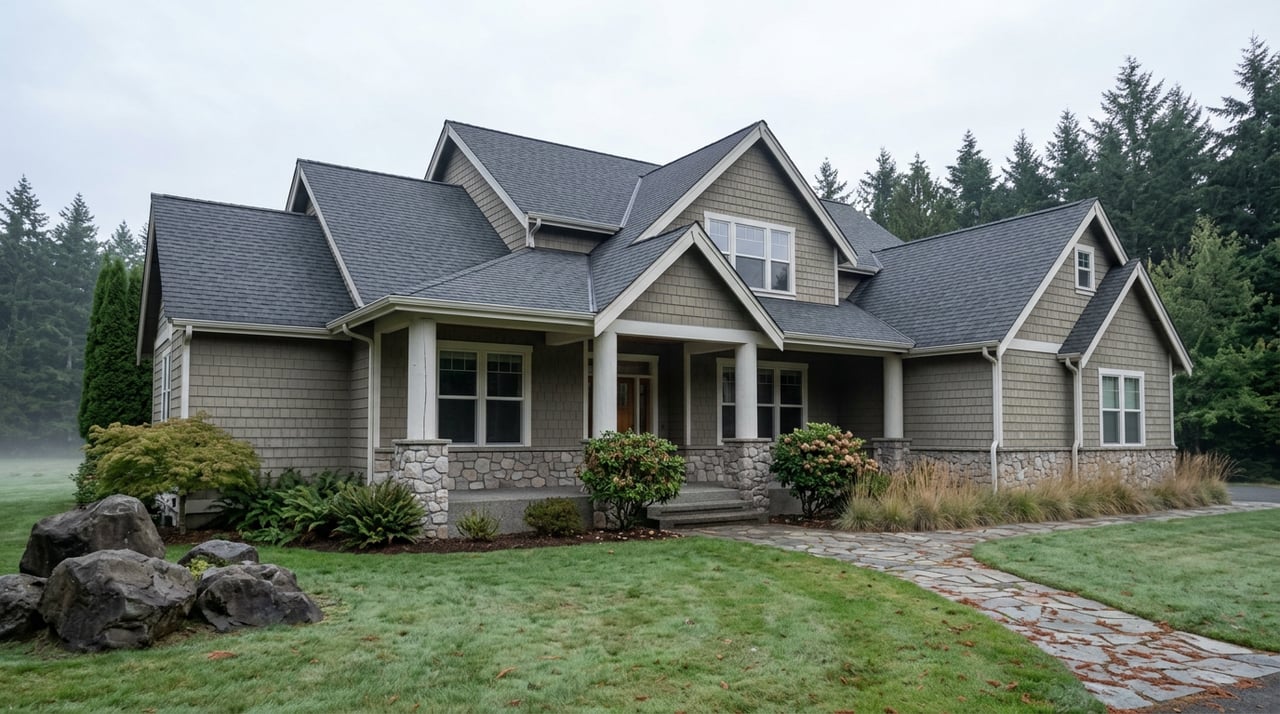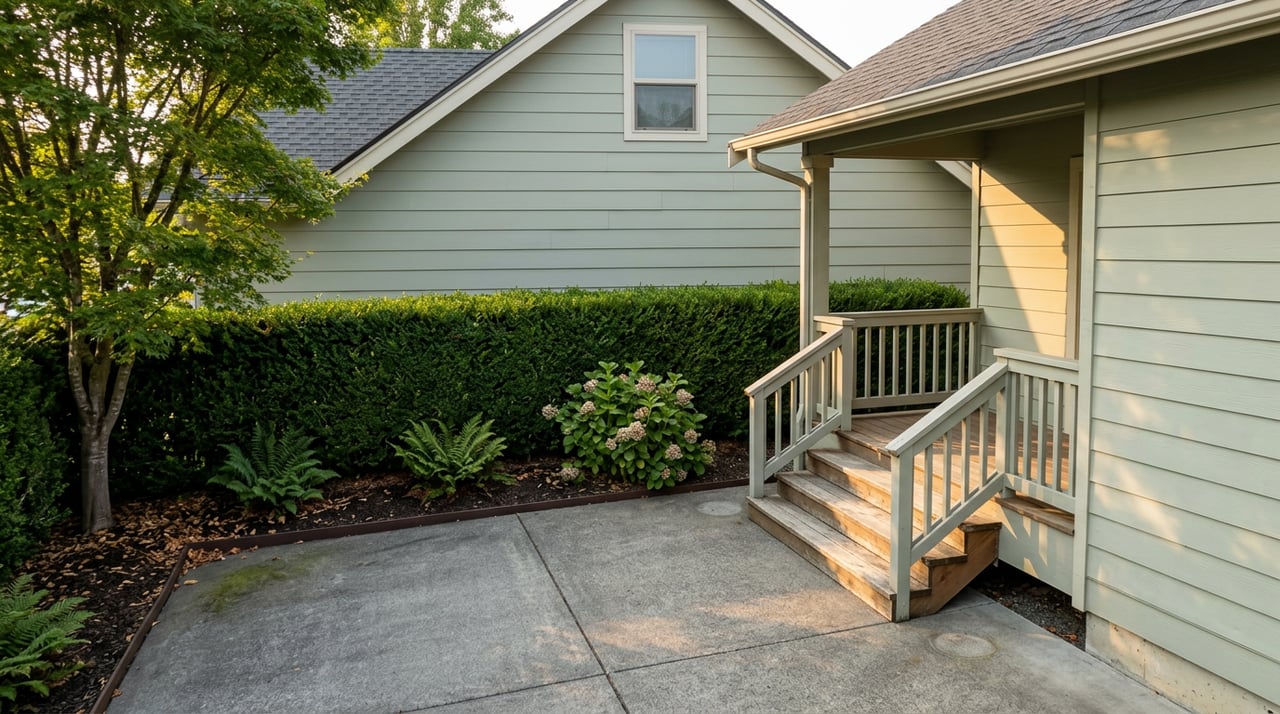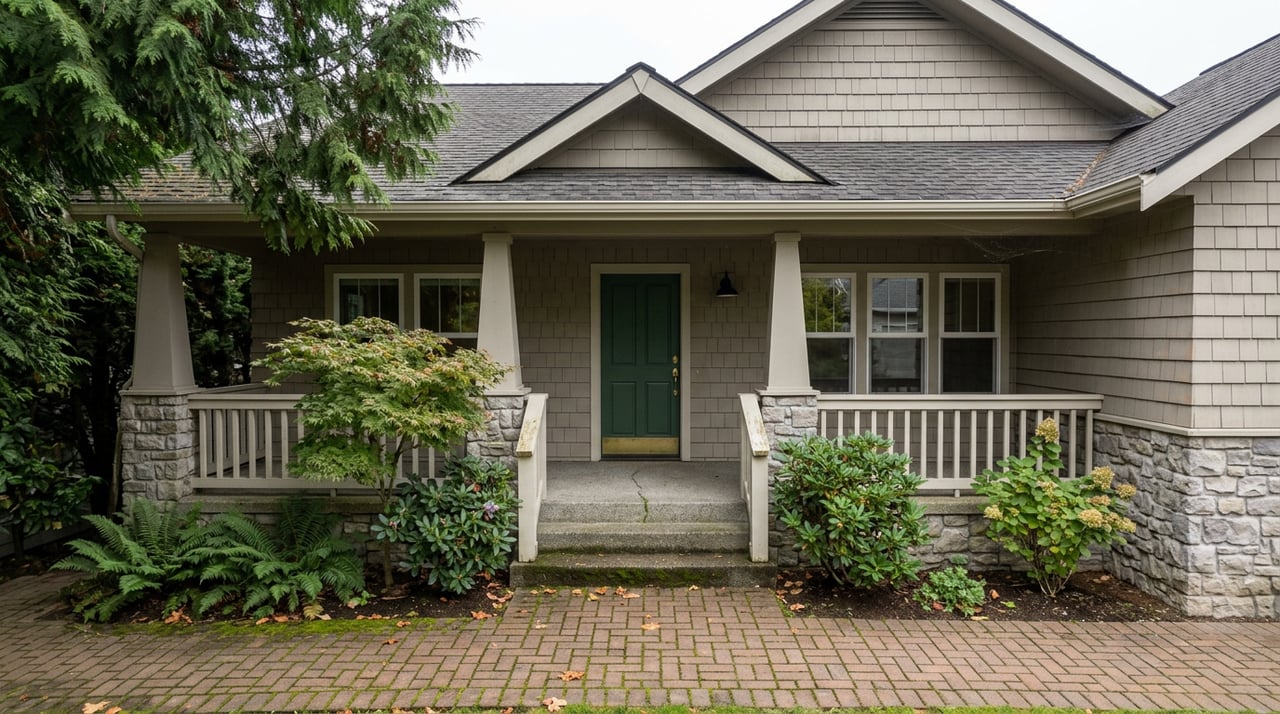
Two Craftsman foursquares can sit three doors apart on the same North End block, built the same decade, styled by the same era of carpenters, and still face completely different rules the moment their owners decide to sell. One can repaint the trim, swap out a window, and rebuild a porch rail without asking anyone. The other needs a City commission's sign-off before a permit is even issued. Neither owner chose this. The difference was drawn on a historic district map decades before either of them bought the house.
That is the quiet mechanism running underneath North End sales right now, and it rarely shows up until someone is already under contract.
The Sewer Certificate That Isn't Optional
Start with the part that touches almost every older home in the neighborhood, historic district or not. The City of Tacoma requires a Certificate of Inspection for a property's private side sewer whenever a home changes hands, and that certificate has to be in hand before escrow closes. This isn't a box to check on a disclosure form. It's a pass that the City itself issues after a licensed contractor scopes the line and files the report with Environmental Services.
The City recommends this inspection specifically for side sewers more than 25 years old or without PVC pipe running to the main. Since most North End homes were built well before 1980, and City guidance notes that buildings from that era are likely to have clay or concrete side sewers, nearly every older sale in this neighborhood is going to trigger the requirement by default. Clay and concrete crack, shift, and let tree roots in over time, which is exactly the kind of slow failure that a routine walkthrough won't catch.
The inspection itself isn't expensive relative to what's at stake. The City estimates $200 to $400 for a typical scope, and local sewer-scope contractors serving the Tacoma area were quoting figures in that same range through 2026. What costs sellers money isn't the inspection. It's discovering the need for it after they've already accepted an offer and are racing a closing date.
That timing problem is sharper in the North End than almost anywhere else in Tacoma. Recent market tracking has shown North End homes moving to pending in about six days, among the fastest paces in the city. Six days doesn't leave room to discover mid-contract that a scope hasn't been scheduled, a cleanout can't be located, or the report needs a re-inspection. Getting the certificate before listing, not after accepting an offer, is the difference between a clean closing and a renegotiated one.
One more detail worth knowing before you assume the worst: the certificate doesn't require you to fix anything. The City's own guidance is clear that repair is left to the discretion of the buyer and seller. A cracked pipe with roots in it doesn't have to be replaced to close. It has to be inspected, disclosed, and certified. What happens next is a negotiation, not a mandate. Tacoma-Pierce County REALTORS have also been required to hand buyers and sellers a Side Sewer Education Flyer at closing since 2010, so this isn't new information asymmetry. It's an old requirement that still catches people off guard because nobody thinks about their sewer line until someone else brings it up.
| Home built | Likely side sewer material | What that usually means |
|---|---|---|
| Before 1960 | Clay tile or cast iron | High likelihood of root intrusion or joint separation |
| 1945 to early 1970s | Orangeburg fiber pipe | Past its design life, prone to collapse |
| After early 1980s | PVC | Generally exempt from the age-based certification trigger |
What The Price Premium Is Actually Buying
North End pricing has run noticeably above the rest of Tacoma through 2026, with neighborhood-level figures placing the median well above $600,000 against a citywide median closer to $500,000. Different trackers put the exact spread in different places depending on the month and the exact boundary they're using, but the direction is consistent. Buyers are paying a real premium to be here.
Part of that premium is obviously the housing stock itself: mature trees, walkability, proximity to Point Defiance, and architecture that isn't being built anymore. But part of it is less visible. Buyers in the North End are also buying into the paperwork bundle described above, whether they realize it or not. A home that's 100 years old is a home that almost certainly needs a sewer certificate, and depending on exactly where it sits, may also come with restrictions on how it can be altered. Sellers who understand that bundle and get ahead of it are the ones who keep their six-day pending timeline intact. Sellers who don't are the ones who watch a clean offer wobble two weeks in in.
The Historic District Line Nobody Draws On A Sidewalk
This is the part that surprises even longtime North End residents. The North Slope Historic Special Review District covers a defined, trapezoidal area of the neighborhood, bounded roughly by North I Street, Division Avenue, and North Steele Street, and capped on the south by North Grant Avenue. Inside that boundary sit roughly 1,285 individual buildings, most of them raised during three building booms between 1888 and 1929, with close to 80 percent constructed before 1930.
Being inside that boundary comes with a specific obligation. Under Tacoma's design review code, any exterior change to a building in the North Slope district that requires a building permit also requires review and approval from the Landmarks Preservation Commission before the permit can be issued. Commission meeting records show exactly what this looks like in practice. An addition proposed for a home on North M Street was denied because the design didn't meet guidelines requiring additions to be compatible in style and subservient in scale to the original structure. A siding replacement request on North L Street, where the homeowner wanted HardiePlank instead of cedar due to cost, was deferred pending more information rather than approved outright. A project on North Sheridan Avenue cleared the same process without objection. These aren't abstract rules. They're a real commission, meeting regularly, weighing real requests from real North End homeowners.
Here's the part that catches people off guard: this obligation is not the same as being listed on the National Register of Historic Places. A property can carry a National Register listing, the kind held by nearby districts like College Park or Buckley's Addition, and face zero design restrictions from that listing alone. The City's own historic preservation office describes National Register status as an honor with no accompanying privileges or demands on the owner. It's the local designation, the Special Review District status that North Slope and the Wedge neighborhood carry, that actually triggers Landmarks review. Two homes built the same year, in the same style, a few blocks apart, can face entirely different rules depending on which side of an invisible boundary they happen to sit on.
For a seller, this matters most when pre-listing repairs are on the table. New siding, a window swap, a porch rebuild done to improve curb appeal before photos go up. If that work is happening inside North Slope or the Wedge, budget time for Landmarks review before a permit gets issued, since the Commission meets on a regular public schedule rather than on demand.
A Sequence That Actually Works
Given how fast North End homes move once listed, the practical order of operations looks like this:
- Confirm whether the property sits inside the North Slope or Wedge Historic Special Review District boundary before planning any exterior pre-listing work. The City's Historic Preservation Office can confirm this by phone or email.
- Schedule the side sewer scope and Certificate of Inspection early, well before a listing goes live, not after an offer is accepted.
- If the scope turns up cracks or root intrusion, remember that repair is a negotiation, not a requirement. Price and terms can account for it without a full pipe replacement being mandatory.
- Keep documentation ready for buyers, including the City's Side Sewer Education Flyer and any Landmarks approvals tied to recent exterior work, so a fast-moving offer doesn't stall on paperwork that could have been assembled in advance.
Frequently Asked Questions
Does the side sewer certificate mean I have to replace a bad pipe before I sell? No. The City's requirement is for inspection and certification, not repair. Any fix is a matter for negotiation between buyer and seller.
If my home is listed on the National Register, do I need Landmarks approval to change a window? Only if the property also falls inside a locally designated Special Review District like North Slope or the Wedge. National Register status by itself carries no design restrictions.
How much lead time should I build in for a Landmarks review? The Commission meets on a regular public schedule rather than reviewing applications on demand, so plan any exterior project inside North Slope or the Wedge well ahead of a target listing date rather than right before it.
None of this is a reason to avoid buying or selling in the North End. It's one of Tacoma's most established neighborhoods for a reason, and most of these steps are manageable with a little lead time. But lead time is the operative phrase in a market where homes are going to pending in about six days. Sellers who get the sewer certificate handled and check their historic district status before listing are the ones whose sale stays on schedule.
If you're thinking about listing an older North End home, or trying to figure out what your specific address requires before it goes to market, Franklin Home Team can walk through the details with you street by street. What's Your Home Worth?